Designing a plant-based food subscription service for the taiwanese workforce.
Blizz is a food subscription service aimed at helping workers in Taiwan eat more healthily by providing plant-based recipes that are nutritious and delicious.
Team: 1 product designer, 1 product manager, 1 engineer, and 1 nutritionist
Impact: Owned the food subscription service experience from concept to development handoff
Tools Used: Figma, Adobe Illustrator, Powerpoint, Pen and Paper.
Duration: 9 weeks.
Responsibilities: My main responsibilities included researching and understanding similar services (competitive analysis), wireframing, prototyping, creating a design system and copywriting.
Background
In the fast paced cities of Taiwan, many workers have a hard time eating healthy and setting aside time to cook. Past research from Taiwan’s Ministry of Health showed that over 40% of the taiwanese white-collar working population is overweight or obese due to long working hours and lack of exercise. They also discovered that 83% of office workers do not consume enough fruits and vegetables on a daily basis.
Challenge
How might we design a service that helps workers in Taiwan eat more healthily while causing the least amount of disruption to their current lives?
Introducing Blizz
Blizz is a plant-based food subscription service that aims to provide healthy and nutritious food to the working class population in Taiwan. Blizz allows subscribers to customize their box with quick and easy recipes that also cater to their fitness goals such as muscle gain, weight loss, or clear skin.
User Flow
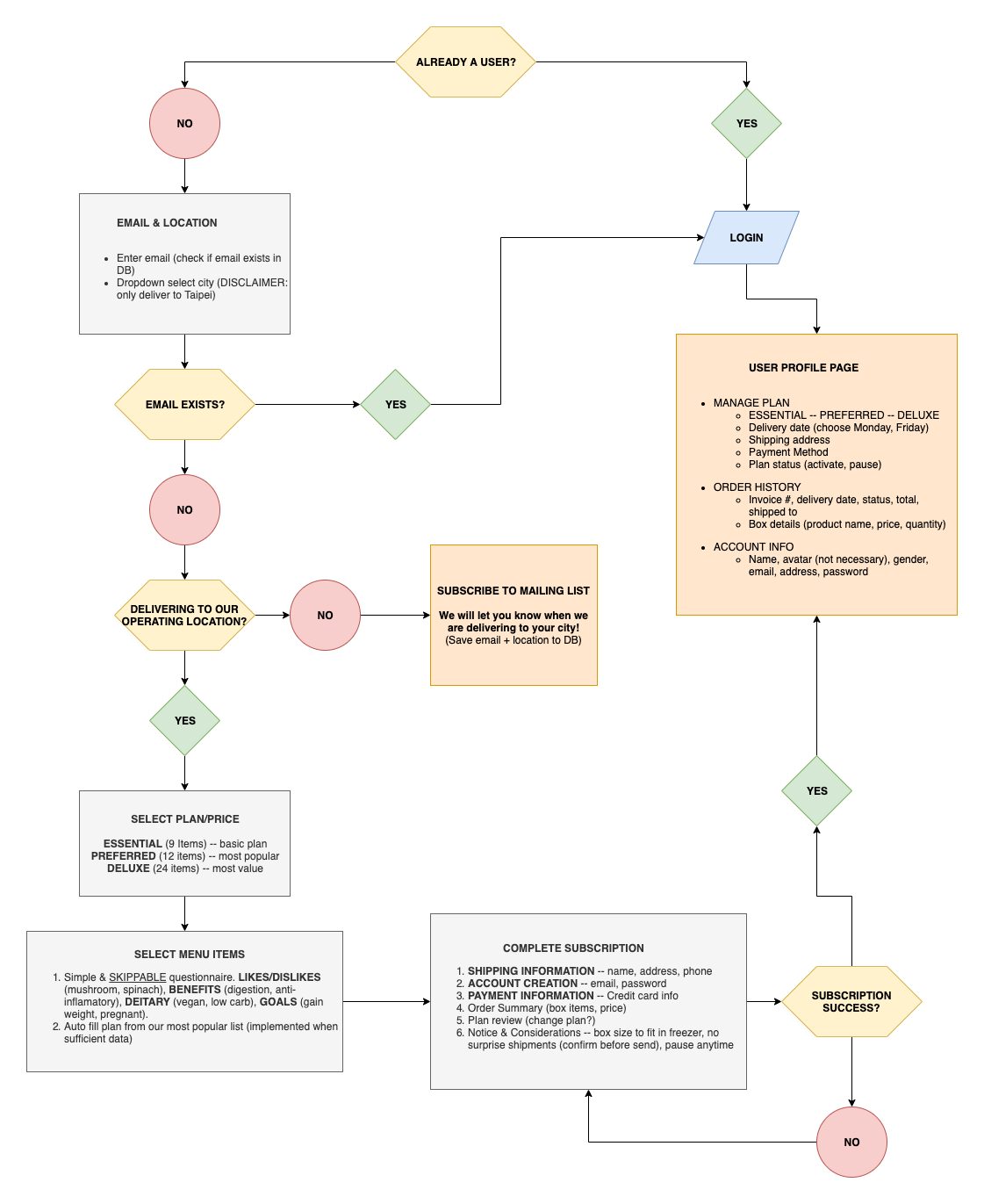
After discussing with the product manager and engineer on how they want the subscription process to work, I roughly planned out the user flow.
Wireframes
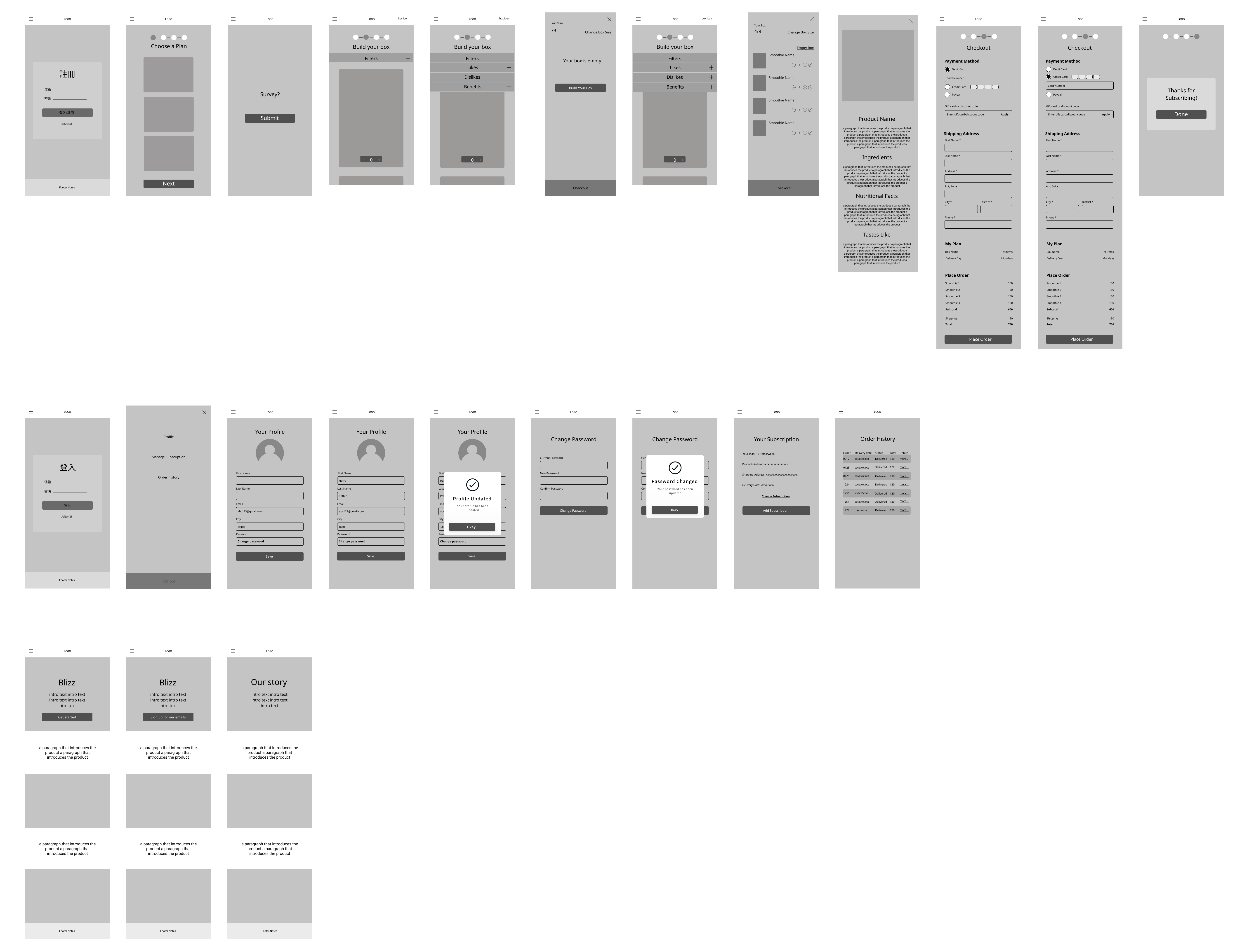
I created wireframes for three different screen sizes (phone, tablet, and web) to demonstrate the user flow. Only showing the phone version here to save space.
Hi Fi Prototypes
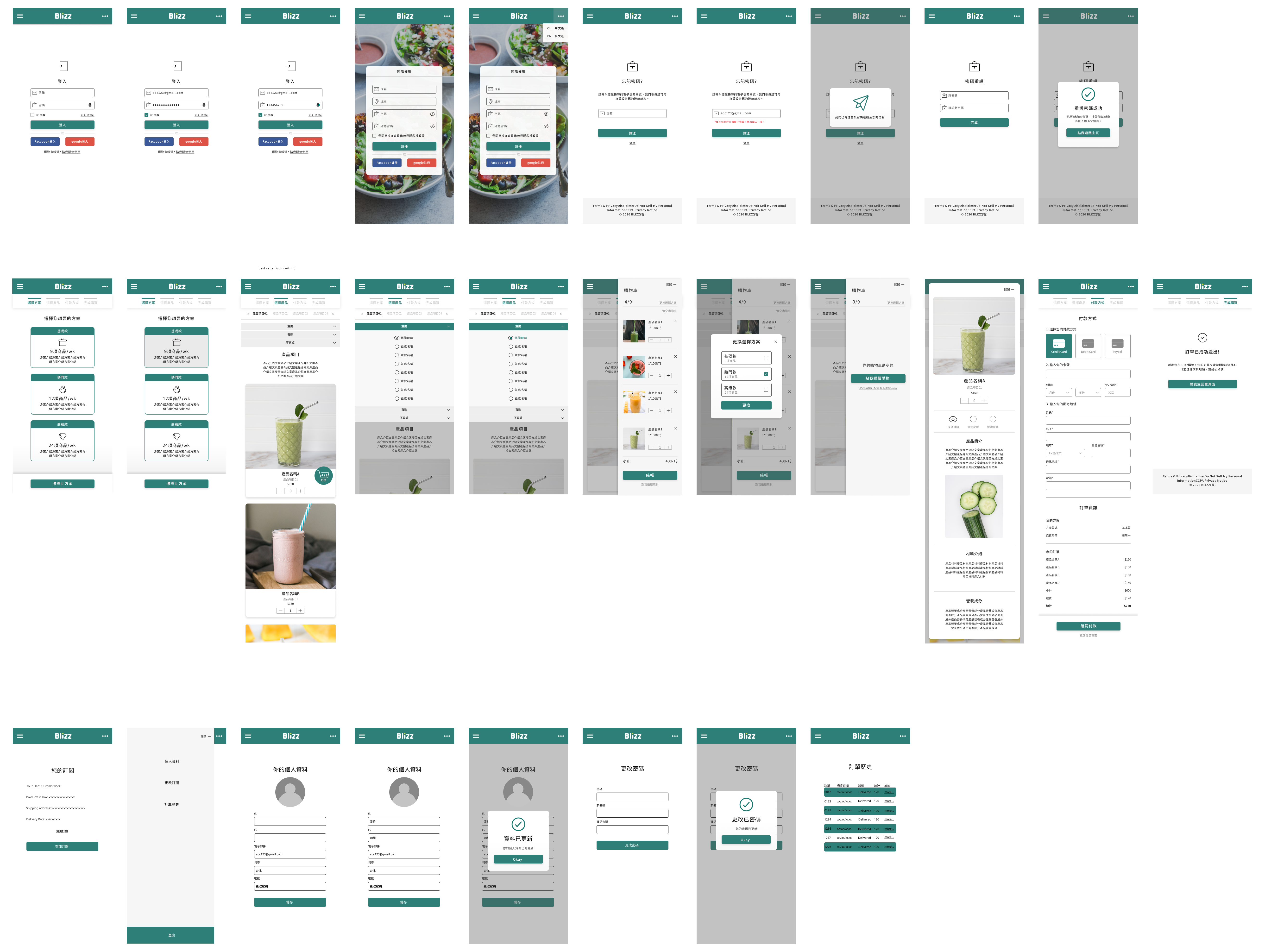
Once the wireframes received approval from the team I started creating prototypes. I worked with the graphic designer to come up with different styles that matched the feeling of “clean, speed, energy, abundance” that the client asked for. Then based off of the chosen style, I created the rest of the prototype.
Final Design
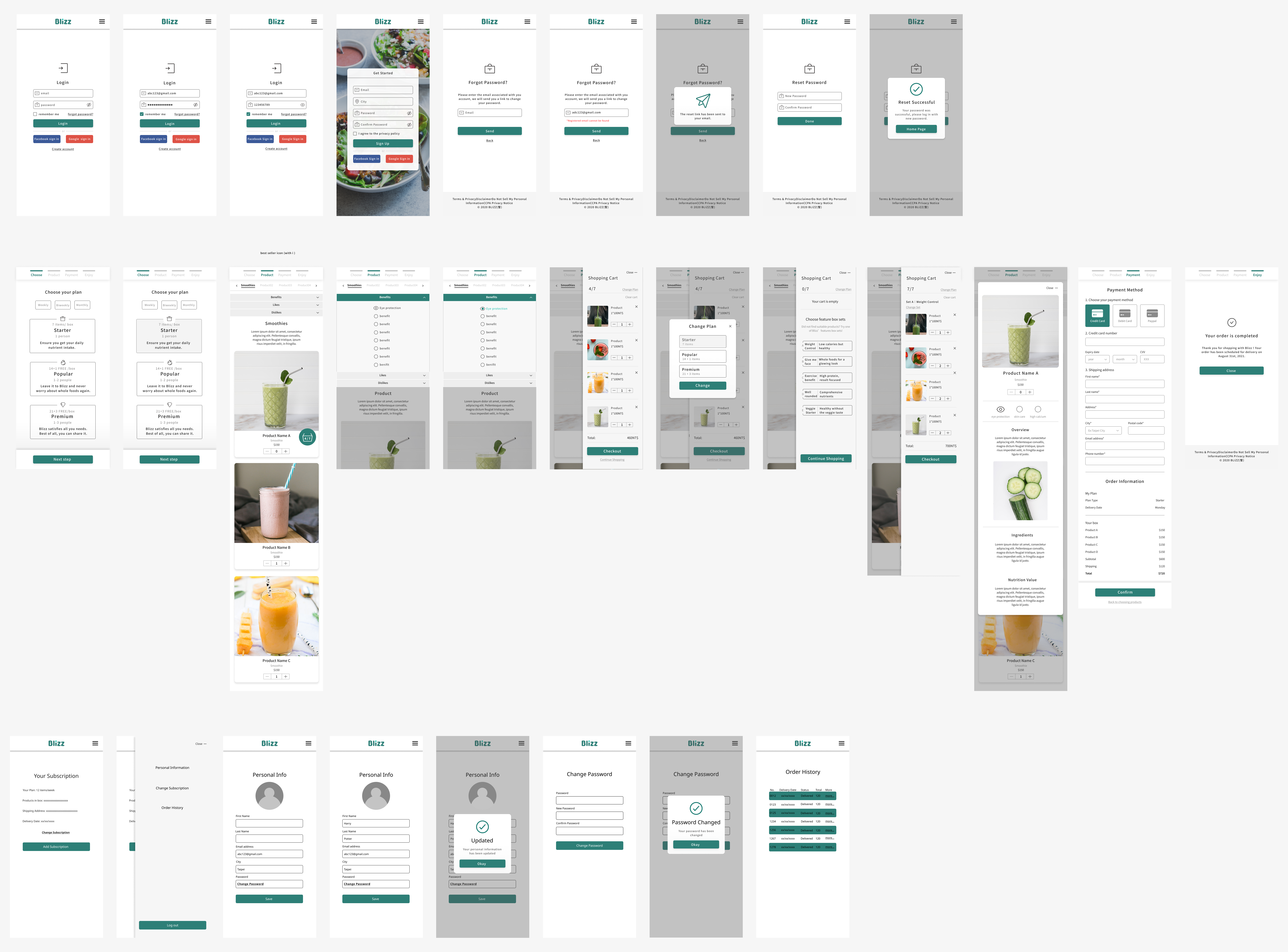
After multiple iterations and changes to the prototype, we decided to change the branding a bit so that it looked more modern and clean.
The Sign Up Process
Product Selection
User Account
Reflection
What I learned
1. Visual Design Process
Having come from a computer science background, I don’t have a lot of experience
with visual design. While working closely with the graphic designer in my team,
I got to learn more about their creative process and ways to seamlessly incorporate
branding into a product.
2. Working in a interdisciplinary team
During my internship, I got to work in an interdisciplinary team with engineers,
product managers, and other designers. This made me realize the importance of
communication and explaining design decisions to non-designers in a clear and
non-jargon way. As well, I learned to create design systems for better hand off
to developers.
Limitations and Future Direction
As time was limited, we were only able to do cognitive walkthroughs with a couple users on the early prototypes. In the future, more user testing on the prototype would be beneficial to validating the user flow and discovering any pain points that the design may have.
My design was signed off for development at the end of my internship, so I look forward to seeing it be developed and iterated on as more testing happens in the development stages.